Functional Materials

Breathable Materials and Moisture-Responsive Fabric Applications
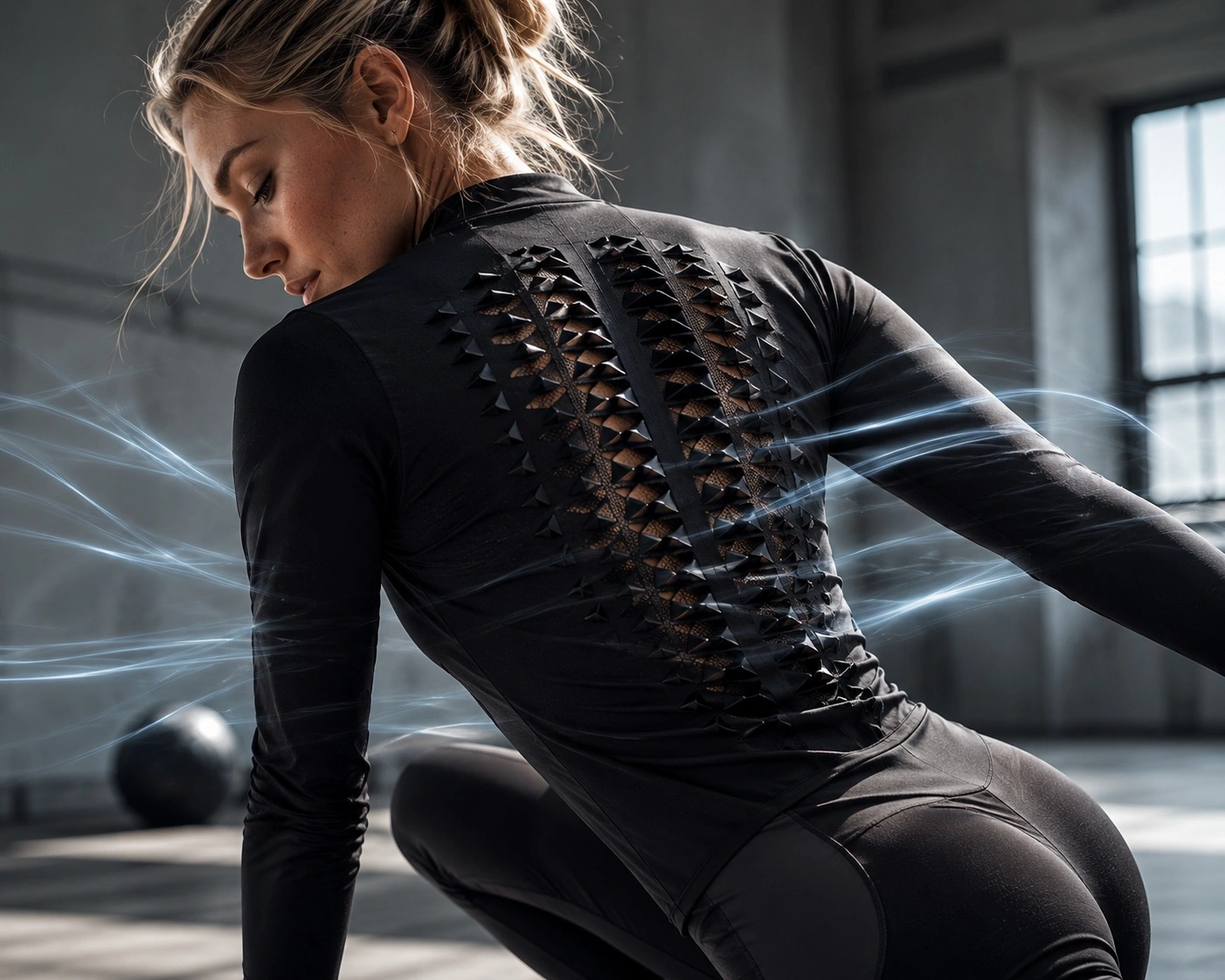
Breathable materials help garments manage heat and moisture, but different ventilation structures work in different ways. Moisture-responsive fabrics are designed to change their opening behavior when exposed to sweat or humidity, creating additional ventilation only when it is needed.
By MotionWarm Product Development Team
Updated June 2026
5-minute read
Moisture-responsive structures can change their opening behavior as fabric conditions shift from dry to wet.
Direct answer

Moisture-responsive breathable fabric is designed to increase ventilation when exposed to sweat or humidity and move back toward its original state as the material dries. Its practical value depends on the opening pattern, garment placement, skin comfort, recovery, and repeated performance after wear and washing.

How moisture-responsive fabric works

The material uses cut, formed, layered, or bonded sections that react to changing moisture conditions. In a dry state, the ventilation sections remain relatively flat or closed. When sweat, humidity, or water changes the material’s internal stress or dimensions, selected sections lift, curve, or open.

As the material dries, the structure moves back toward its original form. The exact response depends on the material system, pattern geometry, thickness, stretch, and how the responsive layer is integrated into the garment.
ImHow this differs from other breathable materials:portant:
 Mesh remains open all the time, perforated fabric uses fixed holes, and moisture-wicking fabric mainly moves moisture across the surface. Moisture-responsive fabric changes its physical ventilation behavior as moisture increases.
The material does not create cold air. It changes the garment’s ventilation behavior by opening additional paths for heat and moisture to escape.

Research from MIT has demonstrated moisture-responsive garment flaps that move in response to body heat and sweat, while later textile research has explored water-responsive structures inspired by leaf stomata. These studies illustrate the broader design principle; the response of any commercial material still needs to be verified through its own sample testing.

MIT moisture-responsive workout suit research · Water-responsive fabric research
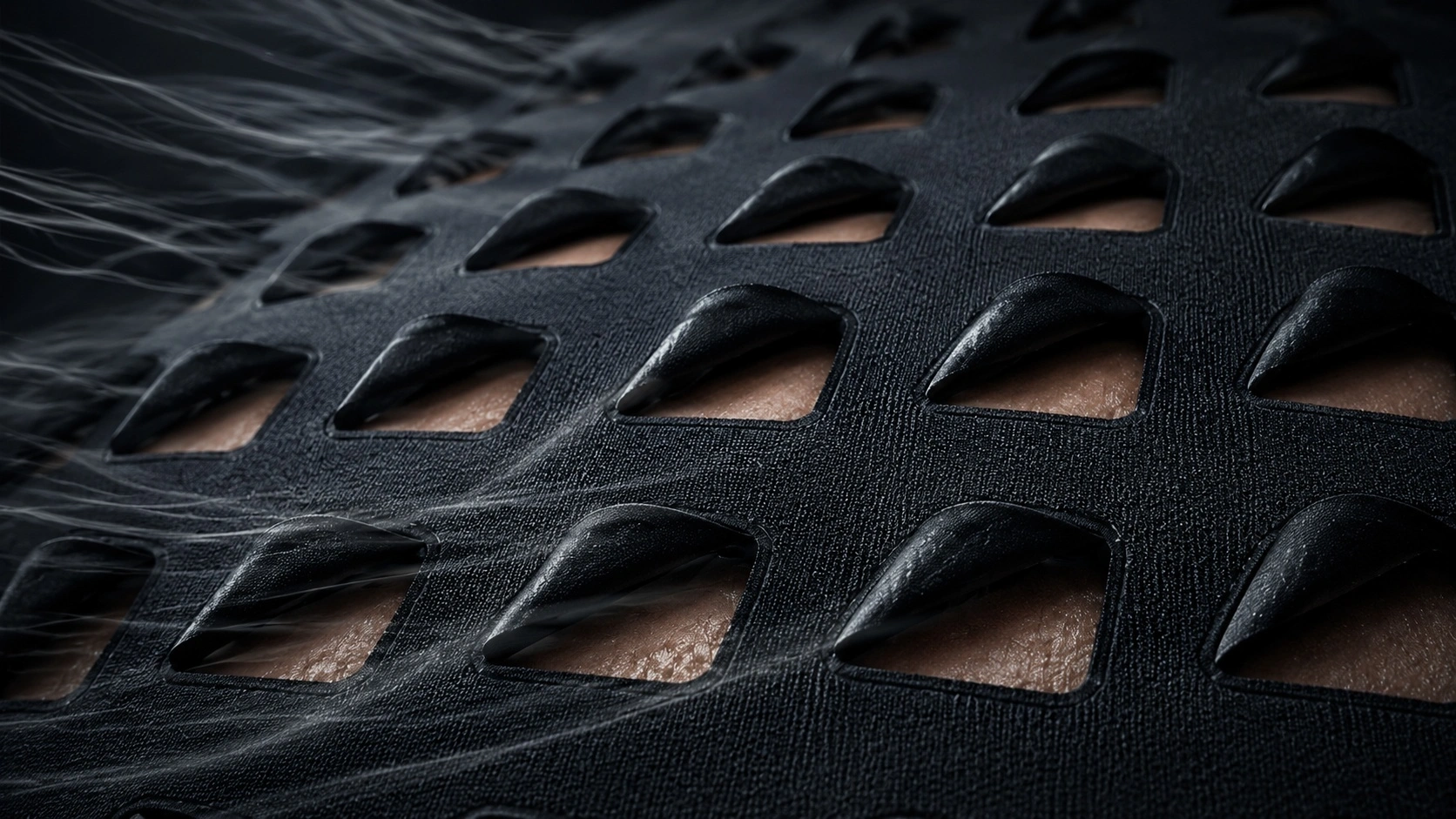
breathable fabric vent structure material closeup for oem apparel
A controlled pattern should open consistently without becoming irregular, sharp, or uncomfortable against the skin.

Where the material works best

Moisture-responsive ventilation is most useful in garment areas where heat and sweat commonly build up. Placement is as important as the material itself because body movement, friction, inner layers, backpacks, and protective equipment can affect airflow.

Underarms

Underarm zones often experience high heat and sweat buildup. The opening structure should remain comfortable during repeated arm movement and should not expose more skin than intended.

Upper Back

The upper back can benefit from additional ventilation, but backpack contact, abrasion, and pressure must be considered before choosing the opening position.

Side Panels

Side panels can support airflow without changing the main front appearance of the garment. They are suitable for active tops, outdoor shirts, and lightweight jackets.

Outdoor and Active Apparel

Workwear, sportswear, and outdoor garments may use localized responsive zones where ventilation is useful, provided durability, stretch, washing, and snagging are tested.

How buyers should evaluate fabric samples

A single wetting test is not enough to evaluate a moisture-responsive fabric. Samples should be observed through repeated wet and dry cycles, stretching, movement, friction, and care conditions.
Review Area
Opening Response
Recovery
Placement
Skin Comfort
Movement
Washing
Integration
What to Check
Does the structure open consistently when exposed to moisture?
Does it move back toward its original state after drying?
Is the material used in the correct heat and sweat zones?
Are the edges, texture, and openings comfortable during wear?
Does the pattern remain controlled during stretch, bending, and friction?
Does the response remain stable after repeated care cycles?
Can the material be sewn, bonded, or laminated into the garment reliably?
Dry-state and wet-state photographs should be taken from the same angle and distance. Buyers should also check whether the opening pattern becomes irregular, whether skin exposure changes, and whether the material remains attached after repeated cycling.

Common questions

No. Moisture-wicking fabrics mainly move moisture across the surface. Moisture-responsive materials change their physical opening or ventilation behavior as moisture conditions change.

Typical areas include the underarms, upper back, side panels, and other zones where heat and sweat accumulate. Final placement should also consider movement, seams, inner layers, and equipment contact.

Buyers should confirm the opening pattern, recovery behavior, fabric weight, stretch direction, color, attachment method, washing requirements, garment location, and inspection method.

About MotionWarm

MotionWarm develops functional materials and wearable product solutions for brands, importers, distributors, and product teams. Our material development work includes moisture-responsive breathable structures and integration support for outdoor and active apparel.

Explore Functional Materials · Discuss an OEM Project

error: Content on this website is protected.