Building a Clear Product System for Outdoor Comfort and Safety
Outdoor brands often begin with a single product idea—a cooling garment, a lighted dog harness, a solar fan hat, or a heated accessory. As the range grows, the larger challenge is keeping the product system clear, practical, and easy for buyers to understand.
By MotionWarm Product Development Team
Updated June 2026
7-minute read
A clear product system connects real use conditions with product structure, functional modules, materials, power, and manufacturing.
Direct answer
A useful outdoor product system groups products by the problems they solve, the people who use them, and the environments in which they must perform. Product families should remain easy to understand, while shared technologies and modules can support several products behind the scenes.
Key takeaways
Start with the user, environment, and primary problem.
Keep product families simple enough for buyers to understand quickly.
Use shared modules where they improve development efficiency.
Adapt the physical product structure to each application.
Expand the range only when a new product adds clear customer value.
Why a clear product system matters
A product range becomes harder to manage when new items are added one by one without a consistent development logic. Similar products may use different names, shared technologies may remain disconnected, and buyers may struggle to understand which option is appropriate for their project.
This affects more than presentation. It can slow quotation work, create repeated sample development, make specifications harder to compare, and require sales teams to explain the same relationships again and again.
A clear product system should make the range easier to explain, compare, develop, and expand. It should help a buyer move from a practical need to a relevant product direction without first understanding every material, control system, or electronic module involved.
Start with the real use condition
Product planning is more effective when it begins with the actual use environment instead of a long feature list. A cooling product for construction work has different priorities from a cooling product for fishing. A lighted dog harness for neighborhood walks has different structural needs from a warning light strip for workwear.
User
Who wears, carries, controls, or maintains the product?
Environment
Will the product face heat, cold, rain, dust, darkness, or repeated movement?
Primary Function
What should the product do first: cooling, heating, visibility, comfort, or utility support?
Product Structure
How should the function be built into the product without affecting fit, movement, comfort, or durability?
These questions provide a clearer starting point for decisions about garment structure, fan placement, heating zones, light distribution, materials, controls, and power.
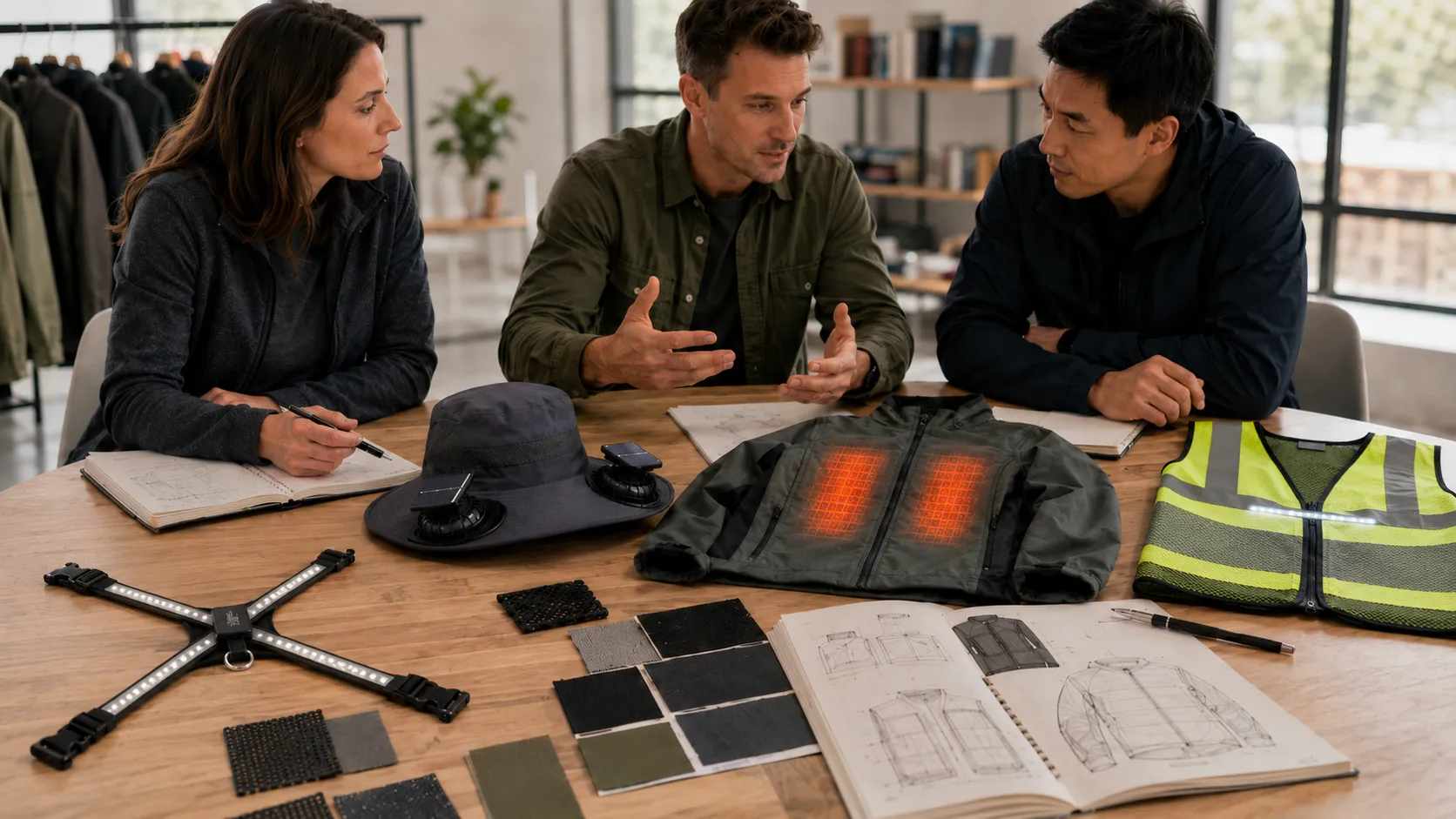
Example: A solar fan hat for fishing may prioritize shade coverage, fan balance, neck protection, and direct outdoor use. A fan garment for warehouse or construction work may place greater emphasis on airflow through the torso, battery access, sitting comfort, and compatibility with work equipment.
Build around product families and shared modules
Product families should describe practical needs that a buyer can understand quickly. For MotionWarm, these needs include pet visibility, heating, cooling, and functional materials.
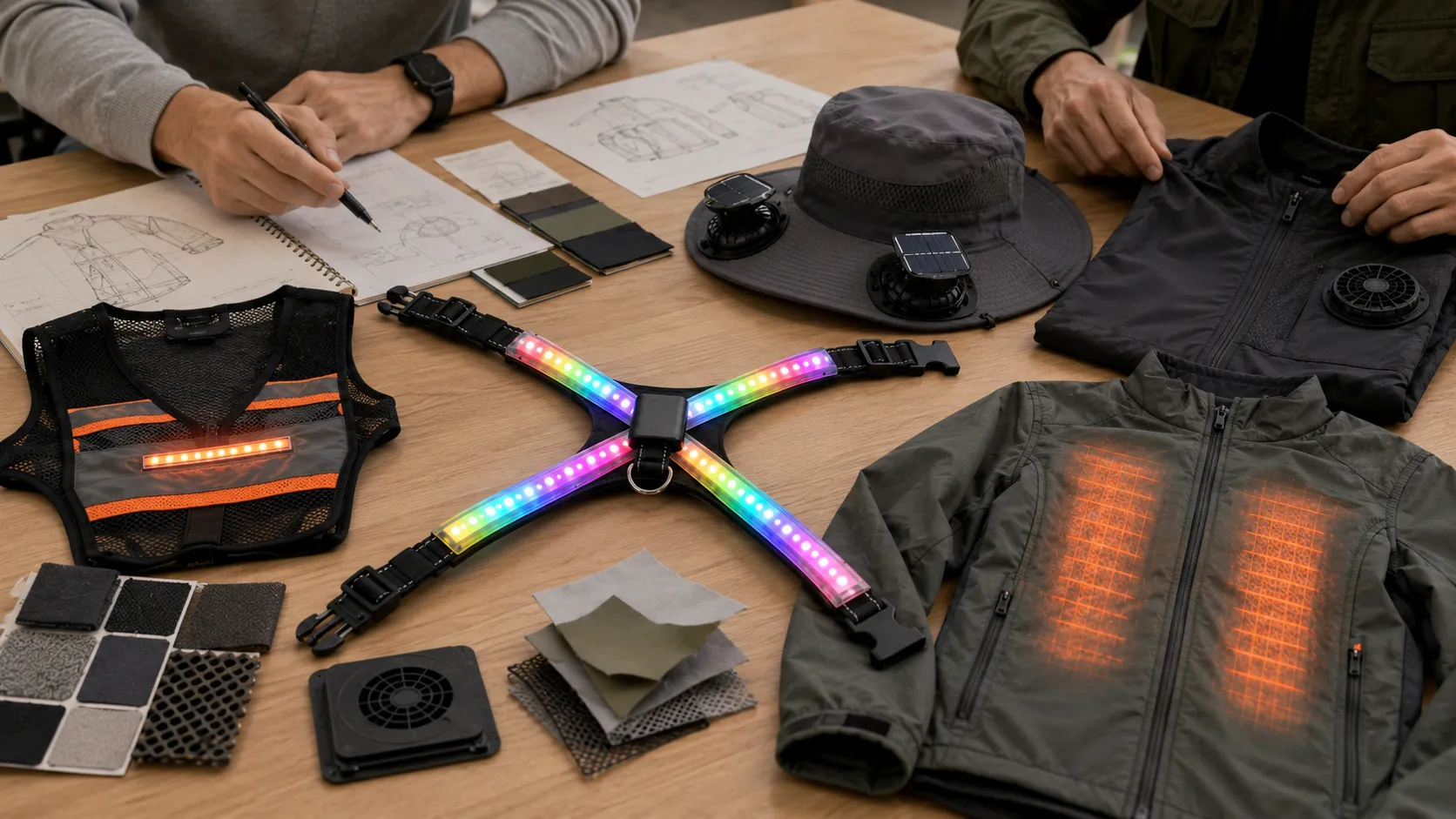
Within those families, shared modules can reduce repeated development. LED systems can support dog harnesses, leashes, and warning products. Heating elements can be adapted for garments, sleeping bags, and accessories. Fan modules can support clothing and hats. Functional materials can be integrated into several garment structures.
Shared technology does not mean every product should use the same physical design. The module may be similar, but the product must still be adapted to the user and application.
A fan module used in a hat requires careful balance and airflow direction.
A fan module used in clothing requires an internal air path and suitable garment volume.
An LED system used in a dog harness must follow the real strap structure and remain comfortable.
A heating element used in a sleeping bag requires different layer construction and wiring than one used in a knee support.
How buyers should review a product range
A buyer should not compare samples by appearance alone. The most useful review separates the product into practical areas and evaluates each one consistently.
Review Area
Use Case
Structure
Function
Power
Materials
Production
What to Check
Does the product match the intended user, environment, and activity?
Does it fit, move, carry load, and remain stable during use?
Does the heating, cooling, lighting, or ventilation system perform consistently?
Are charging, controls, connectors, battery position, and runtime clearly defined?
Are the materials suitable for wear, cleaning, weather exposure, and repeated use?
Can the design be manufactured, inspected, packed, and repeated consistently?
This method helps teams compare sample revisions without allowing one attractive detail to hide a structural or functional weakness. It also creates clearer records for final approval.
Before production, buyers should confirm materials, dimensions, color, control modes, connectors, accessories, packaging, instructions, and inspection points. These details should match the approved sample and the final product documentation.
Reviewing structure, function, power, materials, and production separately makes product decisions more precise.
Common questions
Define the target user, use environment, main function, size range, power method, target market, expected quantity, and any required packaging or compliance conditions.
Yes. A fan, heating element, LED system, or control module may support several products. However, mounting, weight distribution, airflow, protection, and user controls should be adapted to each application.
Review structure, function, power, materials, comfort, durability, and manufacturability as separate areas. Use the same criteria for each sample revision.
Confirm materials, dimensions, colors, control modes, power interfaces, accessories, packaging, instructions, approved sample references, and inspection requirements.
About MotionWarm
MotionWarm develops functional outdoor products for brands, importers, distributors, and product teams. Our work covers heating, cooling, visibility, pet safety, functional materials, and OEM integration.